The American Academy of Pediatrics recommends regular physical activity for all preschoolers. Globally, an estimated 17.6 million children under the age of five are overweight or obese, underscoring the urgent need of early intervention. Federal academic data shows that approximately one‑third of children ages 3–5 are not meeting kindergarten readiness benchmarks, including motor skills, social, emotional development, and self‑regulation.
Our workshops align recreational play with early‑childhood developmental standards; addressing academic, athletic, and health through the power of play.
Our workshops align recreational play with early‑childhood developmental standards; addressing academic, athletic, and health through the power of play.
kindergarten preparation
Sport Series Education preschool workshops turn playtime into kindergarten preparation. The lesson-plan activities provide immediate academic-athletic developmental feedback essential for school-ready skills.
rookie players
Our rookie preschool players transform into experienced learners, guided to explore, move, imagine, and discover at their own pace; building early STEM foundations through play. We nurture curiosity and celebrate small victories—because these playful experiences become the foundation of preschoolers academic‑athletic confidence.
- Grades 1–2 — focus on simple cause‑and‑effect, body awareness, counting, comparing, and observing motion.
- Grades 3–4 — introduce measurement, patterns, predictions, and basic forces.
- Grades 5–6 — apply Newton’s Laws, ratios, variables, controlled tests, and multi‑step problem‑solving.
9 STEM elementary competency skills
- Following Directions — practice listening and completing 1–2 step tasks during games and movement activities.
- Fine Motor Control — Gripping, pinching, building, and drawing to strengthen the small muscles needed for writing.
- Gross Motor Coordination — Running, hopping, climbing, and balancing preparation for physical confidence and classroom self‑regulation.
- Early Math Thinking — Counting steps, sorting objects, recognizing patterns, and comparing sizes building foundational math skills.
- Language & Vocabulary Growth — Naming actions, describing movements, and talking through play, expanding expressive and receptive language.
- Social Play Skills — Taking turns, sharing equipment, and cooperating in group games to support emotional and social development.
- Self‑Regulation — Learning when to move fast, slow down, stop, or switch activities, managing impulses and transitions.
- Problem‑Solving — Figuring out how to get over, under, around, or through obstacles, building early engineering and reasoning skills.
- Independence & Confidence — Completing simple tasks, trying new movements, and celebrating accomplishments in structured learning environments.
Experimental by nature safety by design
Sport Series Education offers safe, age‑appropriate STEM‑sport workshops designed especially for preschoolers. Every playful activity—from simple jumps to obstacle paths—are guided by trained educators who prioritize appropriate form-movement, close supervision, and secure equipment. We blend early STEM concepts with fun physical play, giving children a chance to explore, discover, and build confidence in a carefully structured environment.
muscular-skeletal developmental activities
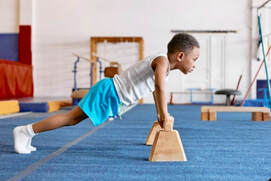
Muscle-bone developmentStrength exercises that stimulate muscle fiber adaptation, coordination, balance, movement and increase bone mineral density.
|

motor skill performanceStrong muscles building and stabilizing joints to develop power, speed, agility and endurance to lower the risk of sport injury.
|
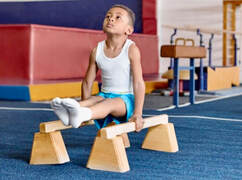
healthy body compositionBuilding lean muscle mass, reducing the risk of childhood obesity; improving posture and daily activity energy capacity.
|